



Everyone can speak and communicate, but healing with words is an art




Abstract
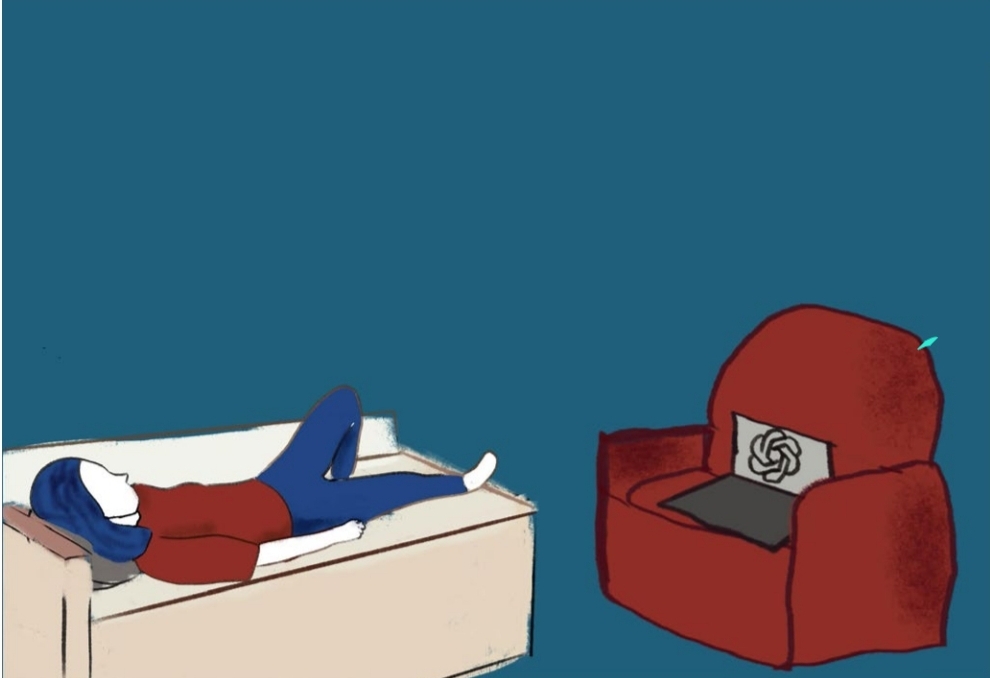
According to recent data, nearly 20% of surveyed young people in the United States have used artificial intelligence (AI) in the form of chatbots for personal advice or even psychotherapy. The capabilities of AI are quite tempting: fast, anonymous, affordable and stigma-free access to therapy. In my opinion, it is worth examining what therapy actually is and how it “works.” Is it really just a game of questions and answers, questions and instant solutions? Is the opportunity to chat and seek advice 24/7 an effective solution to mental health problems?
Citation
Dittmer A. Everyone can speak and communicate, but healing with words is an art. Eur J Transl Clin Med. 2026;9(1):5-10Some time ago, I was waiting in a seemingly endless virtual queue for the technical support that manages the medical records system my office is connected to. The first thing I heard from the service technician was the assurance that “99% of the time, the problem is sitting in front of the computer.” That system was supposed to be helpful and convenient, but despite the training, I didn’t derive any benefits from that technological improvement. In other words, user = loser! I recalled this situation while reading the results of a recent study, which showed that nearly 20% of surveyed young people in the United States have used artificial intelligence (AI) in the form of chatbots for personal advice or even psychotherapy [1]. “Opportunity or risk?” the question is often repeated.
Opportunities
Currently the capabilities of AI are quite tempting: fast, anonymous, affordable and stigma-free access to therapy. But questions arise about the risks posed by a digital algorithm in the role of a therapist, and the risks posed by the users themselves, their use of the app and their expectations. In my opinion, it is worth examining what therapy actually is and how it “works.” Is it really just a game of questions and answers, questions and instant solutions? Is the ability to speak and hold a conversation enough to heal a person? Does being treated simply mean being able to ask a question, express a goal or express a wish? Is the opportunity to chat and seek advice 24/7 an effective solution to mental health problems?
According to psychotherapy researcher Klaus Grawe, 5 key factors contribute to the success of psychotherapy: the therapeutic relationship, problem activation, active assistance in coping with problems, activation and development of one’s own skills, and assistance in clarifying one’s own motivation (including actions, needs and wishes) [2].
The need for empathy
A fundamental factor is the creation of a therapeutic relationship, an empathetic and judgment-free space to help “detoxify the problem” (i.e. reveal its universality) and to suggest the first steps towards possible solutions. Research confirms that the patient-therapist relationship (also referred to as the therapeutic alliance) is a key therapeutic factor, regardless of the psychotherapy type [3-4].
From the cradle, we seek contact with living beings. We know that this interaction (consisting of observing facial expressions, vocal melodies, body movements, and individual behaviors) influences the development of mirror neurons, discovered in 1992 by a team of Italian neurophysiologists led by Giacomo Rizzolatti [5]. Since then, numerous neuroimaging studies have confirmed that mirror neurons play a role in the development of empathy and understanding others, which is the basis of all interpersonal skills. The complex activation of multiple brain areas (motor, sensory, and emotional) reveals a common pattern for all of us, leading researchers to conclude that interpersonal understanding may be based on the so-called embodied simulation [6].
The quality of this simulation, however, is highly dependent on the patient’s biography and the interpersonal relationships that shape it. Similiar to muscles, mirror neurons gain strength when exercised and deteriorate when neglected. Improving mirroring skills is part of the professional training of psychotherapists, and in the first years of their practice, it is the subject of self-discovery and reflection (e.g. conversation recordings) as part of the supervision by an experienced instructor [7].
Seeing the complexity of this system, one can better understand the task a chatbot is trying to tackle when the user places it in the role of a psychotherapist. Simulating empathy, however, seems to be one of the biggest traps that AI continues to fall into. In the past year the press has been reporting about the extremely tragic consequences of seeking support from chatbots, which not only agreed with users that their current situation was hopeless (and the only solution was suicide), but even offered assistance in composing the suicide note [8-9]. On the other hand, chatbots are quite good at handling the problems of moderately stressed users, as well as at other factors of successful psychotherapy: determining motivation and suggesting new strategies for coping with the problem [10].
Between the lines
The goal of a therapeutic relationship is first and foremost the ability to read between the lines, clarifying what is left unsaid, omitted or even concealed. Sometimes that is more important in therapy. Often, this is the unconscious filter of the person seeking advice. The psychotherapist’s active guidance of the conversation aims to gather as much information as possible and to complete the missing pieces of the puzzle. This skill aims to accurately formulate the key problem, as well as to actualize and manage it, which is directly related to the outcome of therapy and is the last of the 5 factors identified by Grawe.
There are numerous causes of missing information: from the patient’s ignorance, disregard for their own thoughts and behaviors, lack of awareness of their illness, hidden agendas, through simple shyness (or shame), to blatant lies and manipulation. Facial expressions, voice modulation, pauses, intonation, and psychomotor movements are sources of information and serve to confirm what is said and to decode what is unsaid. A careful conversation is the foundation of the diagnostic process, culminating in a diagnosis, a treatment plan, and an assessment of prognosis. When we select a voice in the chatbot app, all of the above information is lost (as is currently the case, even in the latest versions, which are designed to process this information) on the way to the virtual interlocutor, preventing responses that may be among the first interventions in the therapeutic process, aimed at clarifying the problem and diagnosis, as well as identifying the patient’s real (and unrealistic) expectations regarding the possibilities of psychotherapy. Currently, AI still has difficulty sensing the intent behind our words and weaving threads of a conversation together [11-12].
As the old saying goes, “if you never say no, you can’t fulfill every yes.” Empathy and understanding are just one aspect of a therapeutic relationship. One of the challenges in building a therapeutic relationship is maintaining the patient’s faith in the therapist’s competence and professionalism while simultaneously breaking free from idealizing the psychotherapist and fantasizing about his or her omnipotence. Within the therapeutic relationship, behaviors and responses that disappoint the patient or expose the therapist’s imperfections can lead to the patient’s frustration or even anger. This requires the psychotherapist to have courage and to demonstrate an attitude that can be an important regulator of the patient’s unfavorable thoughts or behaviors. They also signal authenticity in the therapeutic relationship, establish boundaries, and can strengthen the relationship, enabling work on resolving the patient’s current problems. They can also lead to a breakdown of the therapeutic cooperation, and in extreme situations to involuntary admission of the patient to the psychiatric ward.
Full availability
Chatbots on the other hand, are programmed to provide services to the client’s satisfaction. Try a simple experiment: start an argument with a chatbot or try to force it to remain silent. Research shows that confrontations with a therapist that don’t break the therapeutic collaboration, in fact strengthen the relationship and have a positive impact on achieving therapeutic goals [13]. Silence is an active, multifunctional tool in both directive and non-directive psychotherapy and can serve various functions, e.g. it can mark an important moment in the process of self-expression or in deepening one’s own emotions. It can also express surprise or sympathy. A psychotherapist can become “speechless”… and this is not necessarily a bad thing! However, the chatbot’s silence is most often the result of a disrupted internet connection or a server malfunction.
As mentioned above, developing and stimulating individual skills and competencies is one of the key factors contributing to the success of psychotherapy. Long-term strengthening of self-regulation (except in situations of extreme mental crisis, e.g. severe suicidal ideation) means supporting the patient in maintaining their scheduled appointments within outpatient therapy. The strongest support is in the form of inpatient treatment, where the patient is supervised 24/7, whereas day clinics offer the possibility of daytime supervision and support. This requires the greatest degree of independence from the patient, which through (via successful self-regulation) is the primary goal of therapy. Paradoxically, a 24/7 availability of the therapist would actually be counterproductive. For example, for a patient with hypochondria, somatization disorder or obsessive-compulsive disorder, one of the most difficult challenges is maintaining a waiting period both in contacts with a therapist and also refraining from consultations with the so-called “Doctor Google”.
”Trust”?
Thanks to widespread information campaigns, blogs, and articles, e.g. about healthy nutrition, we are more cautious and more aware of our own responsibility when standing in front of a supermarket shelf. We know that the raspberry-flavored juice on the store shelf is not the same as the homemade juice made from fresh raspberries according to Grandma’s recipe, but an artificially colored, flavored, and thickened drink sweetened with high-fructose corn syrup. Therefore, it seems worth drawing the attention of those seeking help from AI to the above-mentioned shortcomings of the mental health “services” by chatbots.
Additionally, we don’t know what user projections AI is subject to or what human traits and intentions users subconsciously attribute to AI, despite the fact that it doesn’t possess them. Is AI brave enough to admit its ignorance? Will the developers allow AI to disappoint or anger its users? Another very problematic phenomenon is the so-called “AI hallucination,” a situation in which the AI can’t find an answer to a user’s question, so it generates false information. In other words, AI can fabricate information without even realizing it’s doing so! Hmm, this is almost human behavior, but are we, the users even aware of it?
All of these elements present AI developers with real challenges, but for now, it is us, the users, who need to understand that psychotherapy is more than just the sound of a human voice or a written dialogue generated by a pattern or algorithm. Transparent and reliable psychoeducation is needed, because for now, users must face these challenges on their own. In other words, at this moment chatbot therapy is de facto self-therapy and self-help at your own risk!
AI has access to a wealth of information, the most abundant of which is available online and has made its way into the mainstream. This information isn’t alwaysaccurate or the latest and its sources depend on many factors, e.g. paid access or copyrights. The quality of information also depends on the chatbot itself (free versus paid versions). In my opinion, the greatest challenge for users today is the ability to select the information the chatbot should receive and to formulate questions and tasks (so-called prompts) to obtain the most relevant information or to initiate a helpful dialogue. Anyone who has used a chatbot has learned that its responses are only as accurate as the questions directed at it. A lack of self-awareness (so essential in the context of psychotherapeutic advice) can significantly limit the effectiveness of these dialogues. A subjective focus on purely emotional/mental problems can increase the risk of missing the somatic etiology of disorders [14].
Prescription for an app
I am confident that eventually we will find a permanent use for AI in psychotherapy. Mobile apps that introduce users to the practice of meditation, support them during anxiety attacks and offer stress reduction assistance are already available for Android and iOS devices. They are intended to help cope with a storm of thoughts, substance cravings or the urge to self-harm. Memory training apps help patients with dementia or stroke to practice speech and memory. In some countries (such as Germany since 2019), selected apps require a prescription. This guarantees partial or full coverage of the purchase and subscription costs. Many of these apps are based on, or directly adapt, proven therapeutic programs from individual or group therapy, focusing on changing previously identified pathological behaviors. However, for the purposes of adapting them to a mobile app format, these programs are often significantly reduced and generalized. Initial analyses, prepared at the request of the German Association of Statutory Health Insurance Funds (Spitzenverband Bund der Krankenkassen) point out the disappointing quality of research on the effectiveness of these apps. This was met with considerable disappointment, primarily due to the high costs and the hopes for rapid patient assistance while simultaneously relieving the burden on the public healthcare system [15]. Over the last 4 years, patients in Germany have used somatic and mental health apps 861 000 times, worth €234 million. Mental health apps account for 44% of the catalog and generated 30% of activations [16]. However, the transfer of advice/therapeutic interventions from apps to patients does not seem convincing to the analysts, thus emphasizing the role of regulatory agencies, objective data analysis and independent oversight of the quality of these digital healthcare solutions.
Chatbot for conscious user
While most apps still lag behind in terms of expectations and capabilities, I believe they have great potential. Apps typically focus on Axis I diagnoses (DSM classification), a defined task and are instructional in nature. Chatbots, on the other hand, have a more challenging task. Anyone who has worked with patients with personality disorders or comorbidities understands the complexity of such treatment. What many apps haven’t been able to include is working on the (biographical) roots of many dysfunctional behaviors or even working on these behaviors in the context of current events and relationships. Due to the high diversity, this work requires a much more individualized approach, greater flexibility, and more directive behavior on the part of the therapist. Currently, chatbots cannot cope with this, and their effectiveness depends too much on the user’s high self-awareness, which, in many therapeutic processes, is a goal in itself. And therein lies the problem. Today, the risk that a patient seeking support from a chatbot will wander in the fog of their own unconsciousness is still high and the promise of quick help can lead to isolation, alienation, and the confirmation of dysfunctional beliefs about one’s own inadequacy. However, with high self-awareness and a functional focus on the user’s conversation, AI can now enrich advice with information that a psychotherapist typically lacks, e.g. work organization psychology, coaching, exercise therapy.
Final thoughts
AI offers an opportunity for faster, easier, and more affordable access to psychotherapeutic advice for (at this moment) a narrow group of patients with a narrow set of problems. The involvement of academic and training centers is essential for effectively monitoring AI development, and technology companies should be aware of the limitations of their products. The long-awaited and much-needed legal protection of the title of “Psychotherapist” in some countries (e.g. Poland) should also send a strong signal in this direction. Furthermore, we must consider whether the promotion of AI advice in the context of psychotherapy should be driven by materialistic values, e.g. fast, cheap, easy and anonymous access. Technological progress and the associated possibilities are one thing, but what tasks in the therapeutic process do we want to delegate to AI? What is the benefit, the developmental value in this? In the era of digital loneliness, with its emphasis on efficiency and effectiveness, is talking to a machine the right path to a healthy and fully satisfied life among other people? To what extent does the “human element” emphasize the relational and interactive nature of therapy, and act as a reflection and support in the sense of feedback? To what extent does the presence of a living, breathing Gegenüber* determine that during a physical conversation there is a spiritual and emotional encounter, a contact thanks to which the conversation becomes a source of transformation and the spoken words actually heal?
During the first conversation, I always ask all my patients if they drink alcohol, take drugs, self-harm or use food to regulate their mood. While writing this editorial, I decided to add one more question: “Do you seek personal advice from a chatbot?” Because it is true: a drowning person does clutch at straws…
Conflict of interest
None to report.
Funding
None.
References
| 1. |
McBain RK, Cantor JH, Breslau J, Diliberti M, Zhang LA, Zhang F, et al. AI Chatbot Use and Disclosure for Mental Health Among US Adolescents and Young Adults. JAMA Pediatr [Internet]. 2026 Jun 1; Available from: https://jamanetwork.com/journals/jamapediatrics/fullarticle/2849307.
|
| 2. |
Grawe K, Donati R, Bernauer F. Psychotherapie im Wandel: Von der Konfession zur Profession [Internet]. Göttingen: Hogrefe; 1994. Available from: https://doc1.bibliothek.li/aab/FLMA134816.pdf.
|
| 3. |
Baier AL, Kline AC, Feeny NC. Therapeutic alliance as a mediator of change: A systematic review and evaluation of research. Clin Psychol Rev [Internet]. 2020;82:101921. Available from: https://linkinghub.elsevier.com/retrieve/pii/S0272735820301094.
|
| 4. |
Finsrud I, Nissen-Lie HA, Vrabel K, Høstmælingen A, Wampold BE, Ulvenes PG. It’s the therapist and the treatment: The structure of common therapeutic relationship factors. Psychother Res [Internet]. 2022;32(2):139–50. Available from: https://www.tandfonline.com/doi/full/10.1080/10503307.2021.1916640.
|
| 5. |
di Pellegrino G, Fadiga L, Fogassi L, Gallese V, Rizzolatti G. Understanding motor events: a neurophysiological study. Exp Brain Res [Internet]. 1992;91(1):176–80. Available from: http://link.springer.com/10.1007/BF00230027.
|
| 6. |
Schmidt SNL, Hass J, Kirsch P, Mier D. The human mirror neuron system – A common neural basis for social cognition? Psychophysiology [Internet]. 2021;58(5). Available from: https://onlinelibrary.wiley.com/doi/10.1111/psyp.13781.
|
| 7. |
Knol ASL, Huiskes M, Koole T, Meganck R, Loeys T, Desmet M. Reformulating and Mirroring in Psychotherapy: A Conversation Analytic Perspective. Front Psychol [Internet]. 2020;11. Available from: https://www.frontiersin.org/article/10.3389/fpsyg.2020.00318/full.
|
| 8. |
Reiley L. What My Daughter Told ChatGPT Before She Took Her Life. New York Times [Internet]. 2025; Available from: https://www.nytimes.com/2025/08/18/opinion/chat-gpt-mental-health-suicide.html.
|
| 9. |
Duffy C. Parents of 16-year-old sue Open AI, claiming ChatGPT advised on his suicide [Internet]. CNN Business. 2025 [cited 2026 Jun 16]. Available from: https://edition.cnn.com/2025/08/26/tech/openai-chatgpt-teen-suicide-lawsuit.
|
| 10. |
Hatch SG, Goodman ZT, Vowels L, Hatch HD, Brown AL, Guttman S, et al. Correction: When ELIZA meets therapists: A Turing test for the heart and mind. PLOS Ment Heal [Internet]. 2025;2(8):e0000426. Available from: https://dx.plos.org/10.1371/journal.pmen.0000426.
|
| 11. |
Jordan D. AI Can Write Anything, But It Still Doesn’t Understand Why Humans Care. Los Angeles Trib [Internet]. 2026;(June 16). Available from: https://thelosangelestribune.com/2026/02/18/ai-can-write-anything-but-it-still-doesnt-understand-why-humans-care/.
|
| 12. |
Vutukuri K. Artificial Intelligence Works With Patterns, Not Meaning – and That Changes Everything [Internet]. Medium. 2026 [cited 2026 Jan 6]. Available from: https://medium.com/core-ai/artificial-intelligence-works-with-patterns-not-meaning-and-that-changes-everything-e736da3250c9.
|
| 13. |
Eubanks CF, Muran JC, Safran JD. Alliance rupture repair: A meta-analysis. Psychotherapy [Internet]. 2018;55(4):508–19. Available from: https://doi.apa.org/doi/10.1037/pst0000185.
|
| 14. |
Grabb D. The impact of prompt engineering in large language model performance: a psychiatric example. J Med Artif Intell [Internet]. 2023;(6):1-5 Available from: https://jmai.amegroups.org/article/view/8190.
|
| 15. |
Studie: Zulassungsstudien für DiGA oft mangelhaft [Internet]. Ärzte Zeitung. 2025 [cited 2026 Jun 15]. Available from: https://www.aerztezeitung.de/Wirtschaft/Studie-Zulassungsstudien-fuer-DiGA-oft-mangelhaft-457891.html.
|
| 16. |
GKV ärgert sich über steigende Kosten und wenig Nutzen bei DiGA [Internet]. Ärzte Zeitung. 2025 [cited 2026 Jun 5]. Available from: https://www.aerztezeitung.de/Politik/GKV-aergert-sich-ueber-steigende-Kosten-und-wenig-Nutzen-bei-DiGA-457649.html.
|