



Pain reduction following selective nerve root blocks: a prospective study of 107 patients over 7 days

 , Barbara Maria Myszkowska2, Witold Libionka3, , Iwona Maria Handzlik5, Nathan Heimann6


Abstract
Background
Selective nerve root blocks (SNRBs) offer minimally invasive, short-term pain relief for radiculopathy, potentially delaying or avoiding surgery.
Material and methods
This study included 107 adult patients undergoing selective nerve root blocks between January 2022 and March 2025. Inclusion criteria comprised unilateral radicular pain with clinical and radiological confirmation of nerve root compression. Each block consisted of 0.25% bupivacaine, 1% lidocaine, and a long-acting corticosteroid. Pain intensity was documented using the NRS scale, during 7 days post-injection.
Results
Selective nerve root block resulted in a rapid and significant reduction in pain intensity. Pain levels slightly increased between Days 1–3 but remained markedly below baseline and stabilized from Day 4 to Day 7. No statistically significant differences in pain relief were observed between men and women. SNRB demonstrated consistent short-term efficacy and minimal variability.
Conclusions
SNRB was associated with significant short-term pain reduction in patients with radicular symptoms. These findings suggest a potential role for SNRB as a minimally invasive option in pain management and as a bridge to further therapeutic decision-making. Due to the observational design of this study, causal relationships cannot be established.
Citation
Krakowiak M, Myszkowska BM, Libionka W, Buczkowski P, Handzlik IM, Heimann N. Pain reduction following selective nerve root blocks: a prospective study of 107 patients over 7 days. Eur J Transl Clin Med.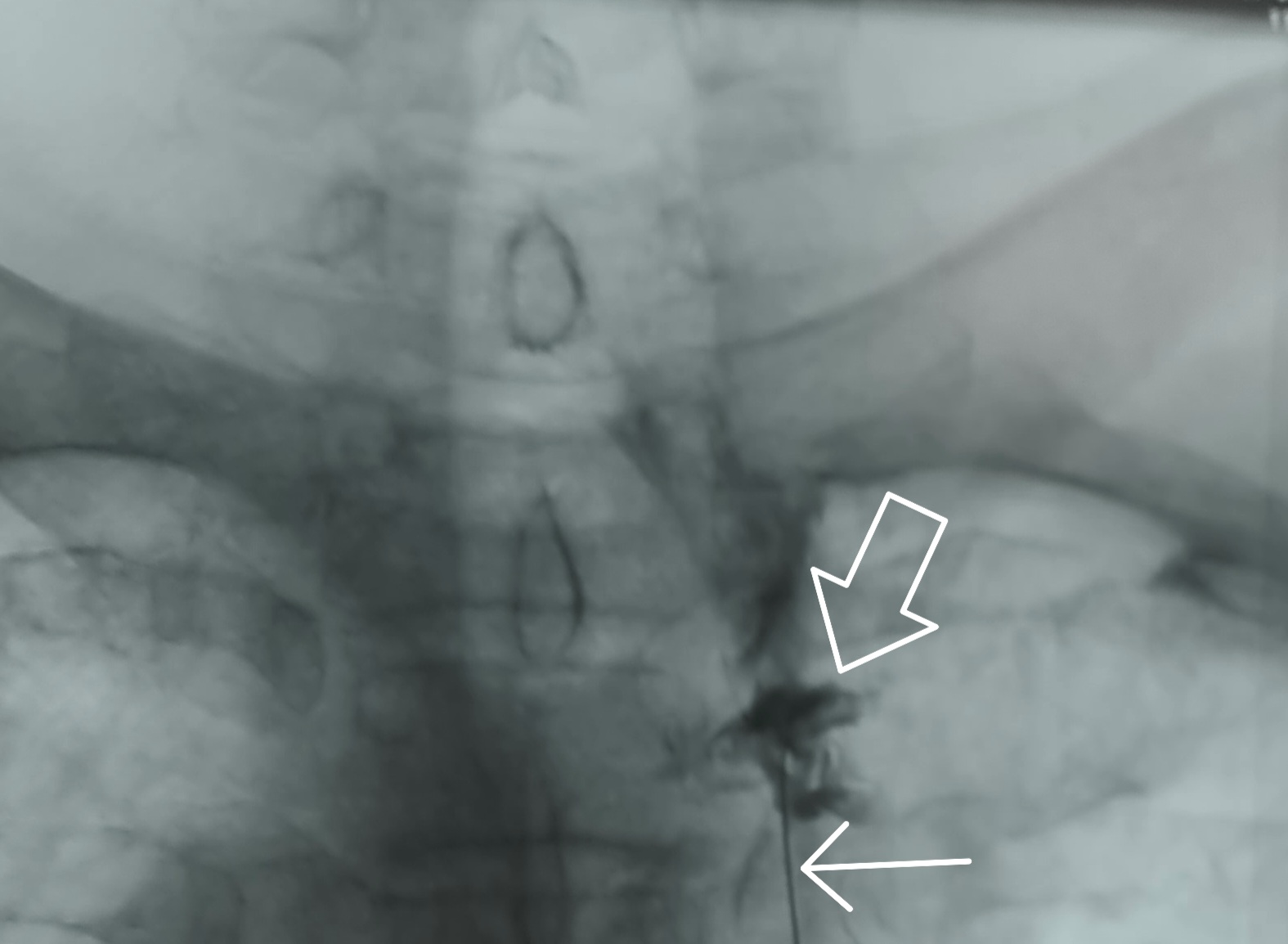


Introduction
In recent years, we have observed a paradigm shift in neurosurgery, i.e. a growing emphasis on minimizing invasiveness of procedures while maximizing patient outcomes [1-2]. Traditional open spinal procedures, though often effective, are associated with significant risks, including surgical complications, postoperative pain, and the need for rehabilitation. For many patients, the recovery process itself is a barrier to treatment, particularly those seeking a rapid return to work and daily activities.
Currently there is a growing demand for therapeutic options that are safe, fast-acting, and outpatient-based. Minimally invasive procedures (e.g. selective nerve root blocks, SNRBs) offer a targeted, localized approach to pain management, particularly in cases of radiculopathy. These procedures are not intended to correct the underlying anatomical pathology, but to provide meaningful, usually temporary pain relief that may facilitate rehabilitation, postpone or avoid surgery in selected patients, and support diagnostic and further therapeutic decision-making.
The limitations of pharmacological therapy further support the need for alternative approaches. Systemic medications often cause undesirable side effects and the overuse of opioid analgesics has led to a well-documented global addiction crisis, prompting clinicians to seek safer, non-addictive pain management strategies [3-4]. Therefore, by directly addressing the inflamed or compressed nerve root, SNRBs are a valuable treatment tool.
Despite their growing popularity, objective data on the short-term efficacy of SNRBs remain limited, particularly regarding the temporal pattern of pain relief during the first days after the procedure. This study addresses this gap by analyzing pain reduction over 7 days following selective nerve root blocks in a cohort of 107 patients. Our objective was to evaluate both the magnitude and the temporal pattern of pain relief, thereby providing evidence to guide clinical decision-making in contemporary, patient-centered spinal care.
Material and methods
This retrospective observational study included 107 adult patients who underwent SNRB procedures between January 2022 and March 2025. All procedures were performed by a single board-certified neurosurgeon with experience in spinal interventions, ensuring consistent procedural standardization across all cases.
Inclusion criteria
Patients were eligible for inclusion if they presented:
- unilateral radicular pain consistent with a dermatomal distribution,
- clinical findings supporting nerve root irritation (e.g. a positive straight leg raise (SLR) or reverse straight leg raise (reverse SLR) test,
- nerve root compression confirmed via magnetic resonance imaging (MRI) or computed tomography (CT) scans.
Exclusion criteria
Patients were excluded from the study if they had:
- indications for urgent surgical intervention (e.g. cauda equina syndrome or rapidly progressive neurological deficits),
- motor weakness due to nerve root compression (e.g. foot drop or quadriceps paresis),
- active systemic infection, bleeding disorders, known allergy to medication or contrast agents, were unable to provide informed consent or comply with follow-up requirements.
Procedure protocol
All procedures were performed in a dedicated interventional suite under fluoroscopic guidance using a standard transforaminal approach. Under fluoroscopic guidance, a spinal needle was advanced and positioned adjacent to the target nerve root within the neural foramen. Correct needle placement was confirmed by contrast-enhanced visualization of the nerve root sleeve, demonstrating that the contrast spread to the symptomatic dermatome and allowing avoidance of intravascular or intrathecal injection (Figure 1).
Figure 1. Fluoroscopic image of selective nerve root block (SNRB), demonstrating the needle positioned adjacent to the target nerve root and contrast spread along the nerve root sleeve
Under fluoroscopic (X-ray) guidance, the anatomical location of the affected nerve root was first identified. Subsequently, contrast medium was injected to confirm accurate needle placement and visualize the nerve root distribution. Once proper positioning was verified, the therapeutic mixture was administered to achieve targeted nerve root blockade.
Once satisfactory needle position was achieved, a therapeutic mixture was administered. The standard injectate consisted of 1 mL of 0.5% bupivacaine (Bupivacainum hydrochloricum 0.5%, WZF Polfa), 1 mL of 1% lidocaine (Lignocainum hydrochloricum 1%, WZF Polfa), and 2 mL of a long-acting corticosteroid containing betamethasone dipropionate and betamethasone sodium phosphate (Diprophos®, MSD), resulting in a total injectate volume of 4 mL. The same medication composition and total volume were used in all patients.
After the procedure, all patients were monitored for 15-30 minutes for immediate adverse events and then discharged with written instructions and follow-up guidance. All patients received a pain diary. Baseline pain intensity was assessed using the Numerical Rating Scale (NRS). During follow-up, patients recorded pain intensity relative to their pre-procedural pain level, which was defined as 100%; for example, a value of 50% indicated that the patient experienced half of the pain intensity present before the procedure. In case of any concerning events or adverse symptoms following the nerve block, patients were instructed to contact the neurosurgeon who performed the procedure directly by telephone.
Follow-up and outcomes
Baseline pain intensity was assessed using the NRS. Relative pain intensity, expressed as a percentage of the pre-procedural pain level (baseline = 100%), was recorded immediately after the procedure, at 1, 2, 3, and 4 hours after the procedure, and once daily on Days 1-7. The primary outcome was relative pain intensity on Day 7 and the corresponding percentage reduction from baseline. Secondary outcomes included the trajectory of relative pain intensity over time and any reported side effects or complications.
Statistical analysis
Changes in relative pain intensity during post-procedural follow-up were assessed using methods appropriate for repeated measures data. Depending on data distribution, repeated measures ANOVA or non-parametric equivalents (e.g., Friedman test) were applied to account for within-subject variability across post-procedural time points. A significance threshold of α = 0.05 was used.
Ethical considerations
This retrospective observational study was based exclusively on data collected during routine clinical care. No additional diagnostic or therapeutic interventions were performed for research purposes. As the analysis was retrospective and involved previously collected anonymized clinical data, no prospective approval from the local Bioethics Committee was obtained. All patients provided informed consent for the clinical procedure.
Results
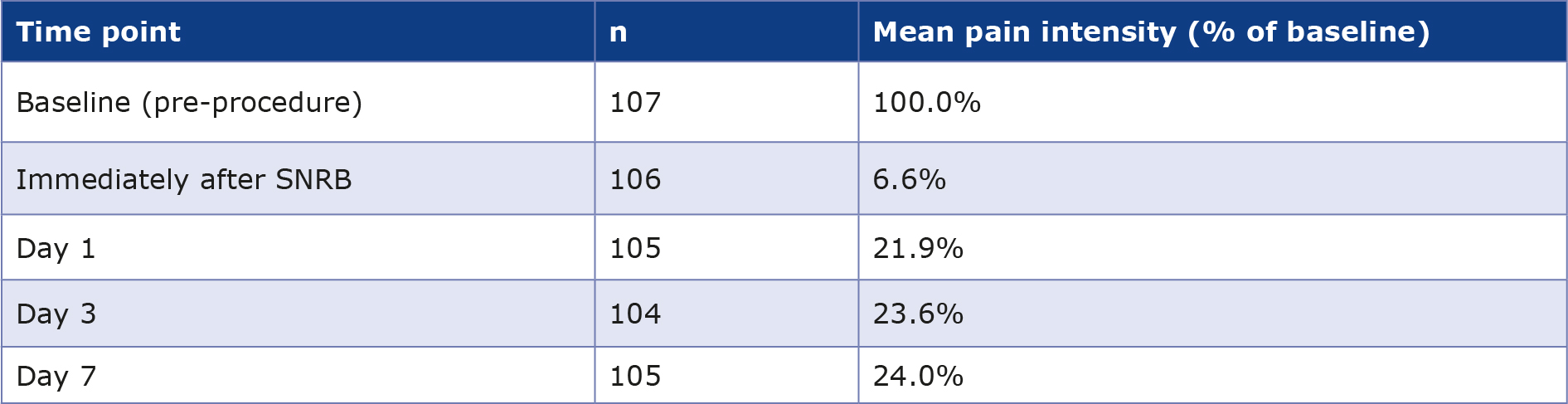
The mean baseline NRS score was 6.8. During follow-up, pain intensity was expressed as a percentage of the pre-procedural pain level, with baseline defined as 100%. Immediately after SNRB, mean relative pain intensity decreased to 6.6% of baseline. It was 21.9% on Day 1, 23.6% on Day 3, and 24.0% on Day 7. Thus, by Day 7, patients experienced a mean pain reduction of approximately 76.0% relative to baseline. The overall cohort included 107 patients; the number of available observations varied slightly between follow-up time points because of missing data. Pain intensity over time is summarized in Table 1.
Table 1. Relative pain intensity over time following selective nerve root block (SNRB)
Pre-procedural pain intensity was defined as 100% for each patient.
n varies slightly between follow-up time points because some observations were missing.
Pain reduction over time
Immediately after the procedure, patients experienced a marked and rapid decrease in pain intensity, with mean relative pain intensity falling to 6.6% of the pre-procedural level. Relative pain intensity subsequently increased to 21.9% on Day 1, 23.6% on Day 3, and 24.0% on Day 7, but remained substantially below the pre-procedural level throughout follow-up. From immediately after the procedure to Day 7, mean relative pain intensity increased by 17.7 percentage points, with a standard deviation of 29.7 percentage points for this within-patient change. Despite this increase, the Day 7 value corresponded to an average pain reduction of approximately 76.0% relative to baseline.
Sex-based differences
Student’s t-test revealed no statistically significant difference in relative pain intensity between men and women during the observation period (significance threshold α = 0.05). Women reported slightly lower pain scores immediately and in the early hours post-procedure, potentially reflecting differences in pain perception or response to local anesthetics. Interestingly, from Day 4 onwards, women’s pain scores slightly increased and in some cases, exceeded those of men, although these variations did not reach statistical significance.
Interpretation and clinical implications
Our results were associated with substantial short-term pain reduction following the SNRB procedure, suggesting a potential role for this minimally invasive intervention in patients with radicular symptoms. The marked initial pain relief post-procedure aligns with the known pharmacodynamics of local anaesthetics combined with corticosteroids. At the same time, sustained pain relief may reflect the anti-inflammatory action of the long-acting steroid. The increase in relative pain intensity after the immediate post-procedural period may reflect the waning effect of the local anaesthetic, while the corticosteroid provided longer-lasting relief. No statistically significant sex-based differences in relative pain intensity were observed. Overall, the observed pattern suggests that SNRB may provide substantial short-term pain relief in patients with radicular symptoms.
Discussion
The concept of a “nerve root block” has become increasingly ambiguous in clinical practice. Some practitioners use the term “nerve block” to describe any injection delivered near the site of pain. In contrast, others refer to periarticular or epidural injections which deliver medication into the spinal canal and act non-specifically on multiple nerve roots at a given level. In contrast, SNRBs precisely target a specific spinal nerve root, based on radiological findings, dermatomal pain distribution and physical exam (e.g. SLR or reverse SLR tests).
In this study, all patients had dermatomal symptoms corresponding to a particular root and made the informed decision to pursue the minimally invasive SNRB, even in situations when surgery was considered a valid treatment option. We can then assume a growing trend among patients who prioritize shorter recovery, wish to avoid hospitalization, and fear surgical procedures.
Biphasic analgesic response
The biphasic analgesic response observed in this study likely reflects the complex interplay of pharmacodynamic and neurophysiological mechanisms. Local anesthetics (e.g. lidocaine and bupivacaine) exert their primary effect by blocking voltage-gated sodium channels, thereby inhibiting ectopic discharges in irritated nerve roots and reducing nociceptive transmission [5]. Beyond that nerve conduction block, local anesthetics may also contribute to a reduction in central sensitization by decreasing afferent input to the spinal cord. In contrast, corticosteroids, act via both genomic and non-genomic pathways. They inhibit phospholipase A2 activity, reducing the synthesis of pro-inflammatory mediators, e.g. prostaglandins and leukotrienes [6]. Additionally, corticosteroids suppress cytokine expression (e.g. TNF-α, IL-1β), reduce perineural edema, and may stabilize neuronal membranes, decreasing ectopic neural firing and dorsal root ganglion sensitization [7]. The observed temporal pattern therefore likely reflects an early anesthetic-driven phase followed by a delayed, steroid-mediated anti-inflammatory and neuromodulatory effect.
Safety and efficacy
No complications were reported in any of our 107 cases, which supports the excellent safety profile of fluoroscopy-guided SNRBs performed by trained specialists. Although concerns have been raised about potential steroid-induced adverse effects on adjacent tissues, real-world data consistently show that these risks are rare and clinically insignificant when proper technique is followed [8]. While complications can occasionally occur, they are generally mild and often associated with transient increases in pain symptoms after the block or non-specific symptoms, e.g. headache or nausea [9].
All patients were provided with the direct contact details of the neurosurgeon who performed the procedure and had a telephone follow-up for the first several days post-procedure, allowing rapid reporting of any concerning symptoms and timely medical advice. This proactive follow-up pathway likely contributed to the absence of adverse outcomes and reinforced patients’ confidence in SNRB’s safety.
Our findings are consistent with prior studies that highlight the short-term effectiveness of SNRBs in reducing radicular pain [10-11]. While some authors have suggested a diagnostic rather than therapeutic value for SNRBs, others demonstrated genuine clinical benefit lasting beyond the pharmacologic action of anaesthetics [12-13]. The present results add to the growing body of evidence supporting SNRBs as a safe, well-tolerated and patient-friendly alternative to more invasive procedures, particularly when close post-procedural monitoring is ensured.
Limitations
This study has several limitations. First, the follow-up period was limited to 7 days only, which precludes conclusions regarding long-term efficacy. Second, the lack of a control group limits the ability to establish causality. Therefore, the observed improvement may partially reflect the natural course of radicular pain or placebo effects. Third, selection bias cannot be excluded, as patients choosing SNRB may differ in clinical or psychological characteristics from those undergoing other type of conservative treatment or surgery. Additionally, our study did not include validated functional outcome measures such as the Oswestry Disability Index (ODI), which could provide a more comprehensive assessment of clinical benefit.
Future Directions
Future research should focus on the following:
- extension of follow-up periods to assess the duration of analgesic effects,
- inclusion of functional outcome measures (e.g. mobility and return to work),
- stratification of results based on radiological patterns (e.g. type of stenosis) and root level involved,
- comparison of SNRBs with alternative conservative strategies, e.g. distal peripheral nerve blocks [14].
Conclusion
Selective nerve root block (SNRB) was associated with significant short-term pain reduction in patients with radicular symptoms. The observed biphasic pattern of analgesia suggests a combined pharmacological effect of local anesthetics and corticosteroids. These findings support the potential role of SNRB as a minimally invasive option in the management of radicular pain and as a bridge to further therapeutic decision-making. Given the observational design and absence of a control group, the results of our study should be interpreted as associative rather than causal.
Funding
No external funding was received for this research.
Conflict of interest
The authors declare no conflicts of interest.
References
| 1. |
Darzi SA, Munz Y. The impact of minimally invasive surgical techniques. Annu Rev Med [Internet]. 2004;55:223–37. Available from: http://www.ncbi.nlm.nih.gov/pubmed/14746519
|
| 2. |
Park J, Ham D-W, Kwon B-T, Park S-M, Kim H-J, Yeom JS. Minimally Invasive Spine Surgery: Techniques, Technologies, and Indications. Asian Spine J [Internet]. 2020;14(5):694–701. Available from: http://www.asianspinejournal.org/journal/view.php?doi=10.31616/asj.2020.0384
|
| 3. |
Kibaly C, Alderete JA, Liu SH, Nasef HS, Law P-Y, Evans CJ, et al. Oxycodone in the Opioid Epidemic: High ‘Liking’, ‘Wanting’, and Abuse Liability. Cell Mol Neurobiol [Internet]. 2021;41(5):899–926. Available from: https://link.springer.com/10.1007/s10571-020-01013-y
|
| 4. |
Wang S. Historical Review: Opiate Addiction and Opioid Receptors. Cell Transplant [Internet]. 2019 Mar 13;28(3):233–8. Available from: https://journals.sagepub.com/doi/10.1177/0963689718811060
|
| 5. |
Benowitz NL, Meister W. Clinical Pharmacokinetics of Lignocaine. Clin Pharmacokinet [Internet]. 1978;3(3):177–201. Available from: http://link.springer.com/10.2165/00003088-197803030-00001
|
| 6. |
Hodgens A, Sharman T. Corticosteroids [Internet]. StatPearls [Internet]. 2023 [cited 2026 Sep 30]. Available from: https://www.ncbi.nlm.nih.gov/books/NBK554612/
|
| 7. |
Šimurina T. Local Anesthetics and Steroids: Contraindications and Complications - Clinical Update. Acta Clin Croat [Internet]. 2019;58(Suppl 1). Available from: https://hrcak.srce.hr/index.php?show=clanak&id_clanak_jezik=326953
|
| 8. |
McLoughlin RJ, Jin A, Canlas EA, Caldera FE, Zhang Y. Persistent Radiculopathy Subsequent to Selective Nerve Root Block. Cureus [Internet]. 2023 Oct;15(10):e46468. Available from: http://www.ncbi.nlm.nih.gov/pubmed/37927613
|
| 9. |
Huston CW, Slipman CW, Garvin C. Complications and side effects of cervical and lumbosacral selective nerve root injections. Arch Phys Med Rehabil [Internet]. 2005;86(2):277–83. Available from: https://linkinghub.elsevier.com/retrieve/pii/S0003999304003156
|
| 10. |
Ko S, Kwon J, Lee Y, Chae S, Choi W. Comparison of Pain-reducing Effect After Selective Nerve Root Block According to the Type of Lumbar Foraminal Stenosis. Clin Spine Surg A Spine Publ [Internet]. 2019;32(2):E60–4. Available from: https://jour-nals.lww.com/01933606-201903000-00009
|
| 11. |
Narozny M, Zanetti M, Boos N. Therapeutic efficacy of selective nerve root blocks in the treatment of lumbar radicular leg pain. Swiss Med Wkly [Internet]. 2001;131(0506):75–80. Available from: https://smw.ch/index.php/smw/article/view/25
|
| 12. |
Yeom JS, Lee JW, Park K-W, Chang B-S, Lee C-K, Buchowski JM, et al. Value of Diagnostic Lumbar Selective Nerve Root Block: A Prospective Controlled Study. Am J Neuroradiol [Internet]. 2008;29(5):1017–23. Available from: http://www.ajnr.org/lookup/doi/10.3174/ajnr.A0955
|
| 13. |
Shaikh H, Kumar A, Kishen TJ. Temporal Pattern of Pain and Disability Following the Administration of a Selective Nerve Root Block in Lumbar Disc Herniation With Radiculopathy. Int J Spine Surg [Internet]. 2021;15(6):1090–5. Available from: http://ijssurgery.com/lookup/doi/10.14444/8195
|
| 14. |
Jha V, Sharma GK, Singh O, Aggarwal J. Efficacy of distal peripheral nerve blocks in lumbar radicular pain: A randomized placebo-controlled triple-blinded study. J Craniovertebr Junction Spine [Internet]. 2024;15(4):448–54. Available from: https://www.ovid.com/10.4103/jcvjs.jcvjs_90_24
|